Wednesday, January 23, 2013

Canja de galinha

Canja de galinha is a typical Portuguese soup made of rice, chicken and flavoring ingredients like olive oil, mint, salt and pepper (1). The traditional recipe, nowadays used more in the countryside, includes also the giblets and unhatched eggs (2). Other difference between original and modern version is that now there is often used small pasta (letters, pip, noodles) instead of rice (3). However, it always continue to be a watery soup (4).
For the origin there are two main versions. The first version says that the soup is originally from China where it is called congee. The Chinese congee is almost identical to Portuguese canja de galinha which is the main argument for this version. What makes the story complicated is that similar soup is eaten almost in all Asia (3).
Another version indicates its origin in India, the Malabar Coast, port of Calicut where Vasco da Gama landed in 1492 (3). So it was a former Portuguese colony and connections between Portugal and Malabar region were stronger than with China (5). Also the Malayalam word kanji (or kenge) which means a hot and salty broth seems to be more adjusted to the current Portuguese name (3, 4).
The habit of eating canja de galinha in Portugal date back the late 18th and early 19th century when there was the French invasion of Portugal and the nobility regularly consumed this dish (5). This soup was also served to Arthur Wellesley (1828-1830), one of the generals who commanded the British army Portuguese-English during the French invasions, when Lavos landed in the first days of August 1808 (6, 7).
Because of Portuguese influence, the soup is also consumed in Brazil and other Portuguese speaking countries and regions (3). But Brazilian canja de galinha is more consistent soup, even able to replace a meal. We could not find a broth light and flimsy but a thick soup which always consists several vegetables and carrots and even potatoes (4).
In Portugal, Cabo Verde and Brazil this soup is always been associated with the dietary balance and recovering health (4). In these countries canja de galinha is widely believed to help a person overcome flu, digestive problems and other mild forms of sickness (1). In certain regions of Portugal, especially in the center of the country, there is a tradition of giving soup only to women after childbirth for a few weeks (3). In Cabo Verde canja is sometimes served after funeral, at the home of the deceased, perhaps because it "soothes" the heart. It is also served during special occasions, such as New Year's Eve, birthdays, and other special family events (1).
In Ajuda National Palace's kitchen there always had to be fresh canja de galinha made for Queen Maria Pia (1847-1911) because she believed that the soup was fundamental to the maintenance of health and therefore she consumed it daily (8, 4).
But she was not only royal person who loved canja de galinha. D. Pedro II, Emperor of Brazil, consuming it daily, even in the intervals of the performances. As J. A. Dias Lopes describes in "The Emperor's Soup", the historians of the time commented that the monarch made sure to "enjoy a hot soup between the second and third acts, which began only after being given the signal that His Majesty ended the ceiazinha" (7).

---
Canja é uma sopa típica portuguesa feita à base de arroz, frango e ingredientes aromatizantes como o azeite, a hortelã, o sal e a pimenta (1). A receita tradicional, hoje em dia mais utilizado no campo, inclui também os miúdos do frango (2). Outra diferença entre a versão original e moderna é que agora não é frequentemente utilizado massinhas (letras, pevide, aletria) em vez de arroz (3). No entanto, continua a ser uma sopa aguada (4).
Para a origem existem duas versões principais. A primeira versão diz que a sopa é originária da China, onde é chamado de congee. O congee chinês é quase idêntico ao Português canja de galinha, que é o principal argumento para esta versão. O que torna a história complicado é que a sopa é consumida quase semelhante em toda a Ásia (3).
Outra versão aponta sua origem na Índia, na Costa de Malabar, porto de Calicute, onde Vasco da Gama aportou em 1492 (3). Foi uma ex-colônia Portuguêsa pelo que as suas relações conexões entre Portugal e região Malabar eram mais fortes do que com a China (5). Também a palavra malaiala kanji (ou kenge), a palavra malaiala que designava um caldo quente e salgado, parece estar mais ajustado à actual designação portuguesa. (3, 4).
O hábito de consumir canja e agregar a ela propriedades medicinais remontam ao final do século XVIII começo do XIX com a invasão francesa em Portugal, quando a nobreza consumia regularmente esse prato. (5). Esta foi também a sopa servida a Arthur Wellesley (1828-1830), um dos generais ingleses que comandaram o exército luso-inglês durante as Invasões Francesas, quando desembarcou em Lavos nos primeiros dias de Agosto de 1808. (6, 7).
Por influência portuguesa, a canja é também consumida no Brasil e outros países e regiões de expressão portuguesa (3). Mas no Brasil a canja é mais consistente. É uma sopa substancial, quase uma sopa completa, capaz de substituir uma refeição. Uma sopa onde entram vários legumes, sempre cenoura e até batata. (4).
Em Portugal, Cabo Verde e Brasil, essa sopa está associado ao equilíbrio alimentar e a regenerador de saúde. (4). Nesses países, canja de galinha é amplamente acreditada no combate à gripe, problemas digestivos e outras doenças (1). Em certas regiões portuguesas, nomeadamente na região centro, existe uma tradição de dar apenas canja às mulheres depois do parto durante algumas semanas (3). Em Cabo Verde canja é servida às vezes depois do funeral, na casa do falecido, talvez porque "acalma" o coração. Também é servido em ocasiões especiais, como a véspera de Ano Novo, aniversários e outros eventos especiais da família (1).
No Palácio Nacional da Ajuda, teria que haver, sempre, canja fresca confecionada para a Rainha Dona Maria Pia (1847-1911) pois acreditava que a canja era fundamental para a manutenção da saúde se consumida diariamente (8, 4).
Mas não era a única que adorava canja de galinha. D. Pedro II, Imperador do Brasil, consumia-a diariamente, até mesmo nos intervalos dos espectáculos. Conforme conta J. A. Dias Lopes em “A Canja do Imperador”, os historiadores da época comentam que o monarca fazia questão de “saborear uma canja quente entre o segundo e o terceiro actos, que só começava depois de ser dado o sinal de que Sua Majestade terminara a ceiazinha” (7).
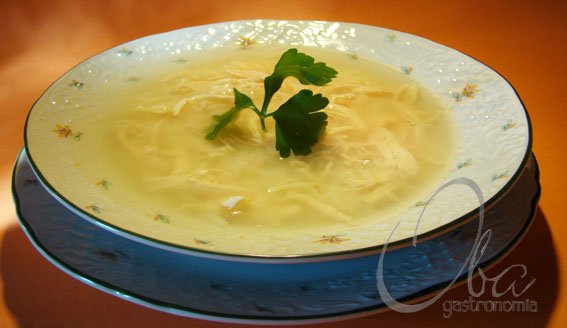
Canja de galinha
For 6 persons / para 6 pessoas
  • 1 chicken about 1,5 kg / 1 galinha (caseira) com cerca de 1,5 Kg
  • 1,7 l of water / 1,7 l de água
  • 5 g of salt / 5 gr de sal
  • 100 g of rice / 100 g de arroz
Place the water with salt and chicken to the pot and heat gently. Remove the foam that is produced.
If the chicken is cooked pour the rice and cook for another twenty minutes, covering the pot.
To give more taste, you can add different herbs (for example mint).

---
Numa panela coloque a água com o sal e a galinha deixando aquecer lentamente e tirando a espuma que se for produzindo.
Estando cozida deite as 100 gr de arroz que se deixa cozer por mais vinte minutos, tapando a caçarola .
Para dar mais sabor, pode adicionar ervas diferentes (por exemplo hortelã).

Friday, January 11, 2013

Chanfana

So, the Christmas holidays are over and I am back here to share my discoveries about Portuguese cuisine. I have never tried the dish that I am going to talk about - chanfana -, but I liked the story behind it. Well, actually stories, in plural, because it turns out that the origin of the dish is not so clear. Anyway, Portugal has recently voted on its Seven Gastronomical Wonders and chanfana was shortlisted for the best meat dish category (although finally beaten by leitão - suckling pig) (1). I think it's quite trustworthy guarantee that the dish is worth trying.
Chanfana (the Portuguese Goat roast/stew) is a traditional dish in the center of Portugal, Beira Litoral Province. Although the chanfana is also well-known in Coimbra, the capital of the province, the actual birth place of this dish is in Vila Nova de Poiares - if the legends are correct (2). However, the dish is even so important in this region that every April a festival called "Capital of chanfana" is organized in Miranda do Corvo. The goal of the festival is to draw attention to local traditions and gastronomy and the way how to preserve it (3).
In the original recipe is used goat meat, but nonetheless, there are certain places in the Beira Litoral Province that use billy-goat, instead, such as – for instance – Coimbra. And then it didn’t take long for people to replace the goat for mutton, lamb, goatling or whatever suited their fancy, so nowadays you can actually find chanfana of about any kind of meat you can think of (2). In Miranda do Corvo there are two unique dishes derived from chanfana: a sopa de casamento and negalho. Although chanfana is typical for several municipalities in the Beira Litoral, a sopa de casamento and negalho are only made ​​in Miranda de Corvo. For a sopa de casamento are used leftovers of chanfana and for negalho goat entrails that are not used for making chanfana (1).
The story of the chanfana dish got tangled with the French Invasions during the Napoleonic campaigns in Europe in the 19th Century, so the versions of the story shift, although the basis remain basically the same. In August 1810 the French Troops invaded Portugal, pushing the English and Portuguese troops all the way to Buçaco, in the Beira Litoral Province. Eventually they pushed the troops south, remaining in the Central Region for about 3 years. During that time, as it was normal back then, they pillaged the surrounding areas, taking everything they could find, that included the animals, but they left behind the old goats and billy-goats, because they found they weren’t good to eat, since it was tough meat. So, the most common version says that the Portuguese people had to make due with what they left, the old animals and they found a way to cook it, so that it would taste better and also the meat was tender. For that they used red wine, lots of it (2).
But another version tells that was not what happened. What happened was that there a Monastery in Semide, which is part of Vila Nova de Poiares in Miranda do Corvo, where the nuns displeased with the state of things, invasions and invaders and pillages and the likes, decided to kill all the animals they had and cook them, so the French couldn’t have them. And apparently according to this version, all the animals they had were old goats, by the looks of it. But here is where the stories differ: by one account, the Frenchmen, to get back at the population or the nuns, had poisoned the waters, so the nuns had no water to cook; another account mentions, that actually who poisoned the waters were the nuns, so the Frenchmen had no water. No matter which version is accurate, the matter is that they didn’t have water to cook, so instead they used red wine (2).
Finally, a more peaceful version of the events leaves out the Frenchmen and just mentions that actually the farmers and shepherds around the Monastery had to pay a rent each year. Many of them paid the rent in kind, depending on what they had, so a lot of them had wine, so they paid in wine, others had goats and so on and so forth. Now, the nuns didn’t have the time or the expertise to keep a large herd, so they found a way to cook the meat in a manner that actually preserved the meat for a long time. Once the goat was cooked, the nuns stored the meat in its original cooking recipients in the fresh cellars of the monastery. The roasted/stewed goat meat cooked in the red wine was preserved in the solified gravy from the cooking for several months (2).
One more interesting fact about chanfana is that it's not cooked in ordinary pan or pot, traditionally the black clay pot from Olho Marinho in Vila Nova de Poiares is used for that. Of course this pot is not obligatory for making chanfana but it is said that the dish tastes much better if you use it (2).

Sunday, December 23, 2012

Bolo Rei

I think I cannot pass Christmas without writing about Bolo Rei.
Bolo Rei (King Cake) is usually eaten around Christmas, from December 25 until the Dia de Reis (literally Day of Kings, a reference to the three kings) on January 6 (1). However, the cake is so popular that it is on sale from the end of November through to the Epiphany (2). (I can confirm this, I think I was eating it on my birthday on 19th of November.)
Bolo Rei is originated in France and only arrived in Portugal during the mid 19th century (2). It was first introduced in Portugal by the Confeitaria Nacional in Lisbon, owned by Castanheiro's family. The son of the family, Baltazar Rodrigues Castanheiro, brought from France a copy of the recipe of  "Gâteau des Rois" (3). However, French Gâteau des Rois and Portuguese Bolo Rei are nowadays very different. Bolo Rei is a round cake with a large hole in the centre, resembling a crown covered with crystallized and dried fruit. It is baked from a soft, white dough, with raisins, various nuts, and crystallized fruit. Also included is the characteristic "fava" (1). In France the cake is circular or rectangular and consists of flaky puff pastry layers with a dense center of frangipane. In the south of France the Gâteau des Rois or Royaume, is a torus-shaped brioche with candied fruits and is more similar to Portuguese Bolo Rei (4).
Actually the existence of a cake similar to Bolo Rei dates back to Romans and a habit of a cake based lottery selecting a King for the festivities of Saturn. In this festivity, cakes were baked with a broad bean inside; whoever got the broad bean would be proclaimed King of the festivity. This practice was later adopted by the Christians in Epiphany celebrations of the Three Wise Men (3). The legend says that the three kings were disputing which one of them would be the first to give their gift to Jesus. Upon their travels they met a baker who baked a cake with a bean inside it. Which ever one of them got the slice of cake with the bean would give their gift first (5). A family tradition in Portugal is that who ever has the slice with the fava bean has to buy or bake next year’s cake (2).
Through the years coins and trinkets were added to the cake instead of the bean which would bring good luck upon the bearer (5). The inclusion of the prize has been discontinued since mid-90s, the producers usually saying it was "forbidden by the European Union, citing safety reasons". However, for example similar Spanish Rosca de reyes or Tortell still contain a gift (1).
In France, the country of origin of this recipe brought here by Castanheiro's son, Bolo Rei was something essential to New Year festivities and commemorations of the Three Magi. During the French Revolution, this practice was banned, given its royal heritage, with the cake becoming known as "sans culottes". The same happened in Portugal with Proclamation of the Republic in early 1911 (3). Everything connected to monarchy, a supreme power, had to disappear, so there was a choice: this is the end of King's cake or it just needs to change the name. The tradition of the cake was already so strong that instead of giving up the cake itself, they gave up the name and then Bolo Rei was known as Bolo República (Republic's cake) (6).

---
Acho que não posso passar o Natal sem a escrever sobre Bolo Rei.
Bolo Rei é comido geralmente por volta do Natal, a partir de 25 de dezembro até o Dia de Reis em 6 de janeiro (1). Contudo, o bolo é tão popular que está à venda a partir do final de novembro até a Epifania (2). (Eu posso confirmar isso, eu acho que eu estava comendo no meu aniversário no dia 19 de novembro.)
Bolo Rei tem origem em França e só chegou a Portugal em meados do século XIX (2). Foi introduzido pela primeira vez em Portugal pela Confeitaria Nacional, em Lisboa, de propriedade da família do Castanheiro. O filho da família, Baltazar Rodrigues Castanheiro, trouxe da França uma cópia da receita de "Gâteau des Rois" (3). Contudo, o francês Gâteau des Rois e Bolo Rei Português são hoje muito diferentes. Bolo Rei é um bolo redondo com um grande buraco no centro, semelhante a uma coroa coberta com frutas cristalizadas e secas. É cozido de uma massa macia, branca, com passas, castanhas diversas, e cristalizado. Também está incluída a característica "fava" (1). Em França, o bolo é circular ou retangular e é composto de camadas massa folhada recheadas com um centro denso de "frangipane". No sul da França o Gâteau des Rois ou Royaume, é um "brioche" em forma circular o com frutas cristalizadas mais semelhante ao Bolo Rei Português (4).
De facto, a existência de um bolo semelhante ao Bolo Rei remonta aos romanos que tinham por tradição que a quem calhava a parte do bolo com brinde era designado Rei para as festividades de Saturno. Esta prática foi adotada mais tarde pelos cristãos nas celebrações da Epifania dos Três Reis Magos (3). A lenda diz que os três reis estavam disputando qual deles seria o primeiro a dar o seu presente para Jesus. Após suas viagens eles encontraram um padeiro que um bolo com uma fava dentro dela. O Rei a quem calhava a parte do bolo com a fava era o primeiro a entregar o presente (5). Uma tradição de família em Portugal é que quem já tem a fatia com a fava tem de comprar ou assar o bolo do ano seguinte (2).
Através dos anos, moedas e bugigangas foram adicionados ao bolon (5). A inclusão do prêmio foi descontinuado desde meados dos anos 90, os produtores geralmente dizendo que foi "proibido pela União Europeia, citando razões de segurança". No entanto, por exemplo semelhante Espanhol Rosca de reyes ou Tortell ainda conter um presente (1).
Em França, o país de origem da receita trazida pelo filho do Castanheiro, Bolo Rei era algo essencial para festividades do Ano Novo e comemorações dos três Reis Magos. Durante a Revolução Francesa, esta prática foi proibida, dada a sua herança real, com o bolo tornado conhecido como "sans-culottes". O mesmo aconteceu em Portugal com a Proclamação da República em 1911 precoce (3). Tudo conectado à monarquia, um poder supremo, tinha que desaparecer, por isso não foi uma escolha: este é o fim de Bolo Rei ou ele só precisa mudar o nome. O mesmo aconteceu em Portugal com a Proclamação da República em 1911 A tradição do bolo já era tão forte que, em vez de acabar com o bolo apenas mudaram o nome passando a ser conhecido como Bolo República (6).
Bolo Rei (7)
  • 1 gift / 1 brinde
  • 1 dessert spoon of salt / 1 colher (sobremesa) de sal
  • 1 dl of port wine / 1 dl de vinho do Porto
  • 1 bean / 1 fava
  • 150 g of sugar / 150 grs de açúcar
  • 150 g of crystallized fruits / 150 grs de frutas cristalizadas
  • 150 g of dried fruits as you like / 150 grs de frutos secos a gosto
  • 150 g of margarin / 150 grs de margarina
  • 30 g of yeast / 30 grs de fermento de padeiro
  • 4 eggs / 4 ovos
  • 750 g of flour / 750 grs de farinha
  • jelly / geleia q.b.
  • 1 orange peel / raspa de 1 laranja
  • 1 lemon peel / de 1 limão

Chop the fruits (reserving a few whole for garnish) and leave them to macerate with port wine. Dissolve yeast in 1 dl of warm water, add 1 cup of the flour and leave it to a temperate environment for 15 minutes.
Meanwhile, beat the butter, sugar and peel of orange and lemon. Add eggs, one at a time beating, and yeast dough. When everything is well mixed, add the rest of the flour, salt and port wine. Knead until smooth and elastic consistency and mix the fruits.
Shape the dough into a ball, sprinkle with flour and cover with a cloth and leave to yeast in a sheltered environment for 5 hours.
When the dough has doubled the volume, put it on a board and make it a hole in the middle. Enter the gift (wrapped in greaseproof paper) and bean, leaving it to stand over 1 hour.
Brush the cake with egg yolk, garnish with crystallized fruits, sugar cubes, nuts (pine nuts, half-nuts, almonds ...) and bake in a hot oven.
After cooking brush the cake with jelly diluted in a warm water.

---
Pique as frutas (reserve algumas inteiras para enfeitar) e deixe-as a macerar com o vinho do Porto. Dissolva o fermento em 1 dl de água morna, junte a 1 chávena de farinha e deixe a levedar, em ambiente temperado, durante 15 minutos.
Entretanto, bata a margarina, o açúcar e as raspas da laranja e do limão. Junte os ovos, batendo um a um, e a massa de fermento. Quando tudo estiver bem ligado, adicione o resto da farinha, o sal e o vinho do Porto. Amasse até obter uma consistência elástica e macia e misture as frutas.
Molde a massa numa bola, polvilhe com farinha e tape com um pano, deixando levedar, num ambiente resguardado, durante 5 horas.
Quando a massa dobrar o volume, ponha-a num tabuleiro e faça-lhe um buraco no meio. Introduza o brinde (embrulhado em papel vegetal) e a fava, deixando-a repousar mais 1 hora.
Pincele o bolo com gema, enfeite com frutas cristalizadas inteiras, torrões de açúcar, frutos secos (pinhões, meias-nozes, amêndoas…) e leve a cozer em forno bem quente.
Depois de cozido, pincele o bolo-rei com geleia diluída num pouco de água quente.


1. Wikipedia - Bolo Rei
2. Piglet in Portugal - Bolo Rei - A symbol of the Christmas season in Portugal
3. Confeitaria Nacional - Bolo Rei
4. Wikipedia - French King Cake
5. Tia Maria's Blog - Bolo Rei - King of Portuguese cakes
6. Portugal Roteiro Gastronómico - História do Bolo Rei, brindes e favas
7. Picture
8. Recipe

Saturday, December 15, 2012

Christmas dishes / Pratos de Natal

I just realized that after 10 days it's Christmas! For me it's quite hard to believe it because you know, I come from Northern Europe where good Christmas are with snow. Here, in Portugal, everything is green (better than in summer I would say), we pick oranges from our trees and sometimes when it's sunny, it's possible to be outside just with a T-shirt!
Anyway, this time I introduce very briefly typical Portuguese Christmas dishes, including main course, desserts and also drinks.

---
Eu só percebi que após 10 dias é Natal! Para mim é muito difícil de acreditar, porque você sabe, eu venho do norte da Europa onde boas Natal são com neve. Aqui, em Portugal, tudo é verde (melhor do que no verão eu diria), nós escolhemos laranjas em nossas árvores e, por vezes, quando está sol, é possível estar fora apenas com uma t-shirt!
De qualquer forma, desta vez eu introduzo brevemente pratos típicos portugueses de Natal, incluindo prato principais, sobremesas e bebidas também.


Main courses / pratos principais
  • bacalhau – codfish in every form (for example bacalhau com natas)
  • polvo cozido - boiled octopus
  • Perú Recheado com Nozes - turkey stuffed with walnuts
  • borrego assado - roasted lamb
  • cabrito assado - roasted goat
Desserts / sobremesas
  • Bolo Rei (King Cake) - a beautifully decorated fluffy fruitcake
  • Bolo-Rei Escangalhado (Broken King Cake)- it is like the first one, but has also cinnamon and chilacayote jam (doce de gila)
  • Bolo-Rei de Chocolate (Chocolate King Cake) - it is like the King Cake, but only has chilacayote jam, nuts, raisins and less (or no) fruit, which is replaced by lots of chocolate chips
  • Bolo-Rainha (Queen Cake) - similar to Bolo-Rei, but with only nuts, raisins and almonds
  • Bolo-Rei de Chocolate - it is like the Bolo-Rei, but has less (or no) fruit, nuts, chilacayote jam and lots of chocolate chips
  • broa castelar - a small, soft and thin cake made of sweet potato and orange
  • fatias douradas - golden slices, known as french toast - slices of pan bread, soaked in egg with sugar, fried and sprinkled with powdered sugar and cinnamon
  • rabanadas - they are like fatias douradas, but made with common bread
  • formigos - a delicious dessert made with sugar, eggs, pieces of bread, almonds, port wine and powdered with cinnamon
  • filhoses - depending on the region, the may be thin or fluffy pieces of a fried dough made of eggs, honey, orange, lemon, flour and anise, sprinkled - or not with icing sugar
  • coscorões - thin squares of a fried orange flavoured dough
  • azevias de grão, batata-doce ou gila - deep fried thin dough pastries filled with a delicious cream made of chickpea, sweet potato or chilacayote, powdered with sugar and cinnamon
  • tarte de amêndoa - almond pie
  • tronco de Natal - Christmas log - a delicious Swiss roll, resembling a tree's trunk, filled with chocolate cream, decorated with chocolate and mini - 2 cm Christmas trees
  • lampreia de ovos - a sweet made of eggs, well decorated
  • sonhos - an orange flavoured fried yeast dough, powdered with icing sugar
  • velhoses - they are like the sonhos, but made with pumpkin
  • bolo de Natal - Christmas cake
  • pudim de Natal - Christmas pudding, similar to flan
  • Massa de Filhos A Christmas doughnut traditionally left to rise whilst the family attend Midnight mass
  • Leite Creme - a creamy Christmas dessert
  • sopa dourada - Golden Soup – which is actually a dessert not a soup.
  • mexidos - another dessert from the North of Portugal. This looks very simple to make!
  • arroz doce - sweet rice pudding – yes, a favourite at Christmas time too.
Drinks
  • vinho quente - eggnog made with boiled wine, egg yolk, sugar and cinnamon
  • just a lot of wine
---

Cabrito assado
Cabrito assado (3a)

For 6-8 persons / para 6-8 pessoas
  • 1,5 kg of kid goat / 1,5 kg de cabrito
  • 1 big tablespoon of ground pepper / 1 colher de sopa bem cheia de massa de pimentão
  • 4 cloves of garlic / 4 dentes de alho picados
  • 3 bay leaves / 3 folhas de louro
  • 1 onion cut to half moons / 1 cebola cortada em rodelas meia-lua
  • sprigs of parsley / raminhos de salsa
  • 500 ml of white wine / 500 ml de vinho branco
  • salt / sal q.b.
  • pepper / pimenta q.b.
  • 1 kg of potatoes for roasting / 1 kg de batatinhas para assar
  • 30 ml of olive oil / 30 ml de azeite
  • 2 tablespoons of lard / 2 colheres de sopa de banha
  • 200 ml of broth / 200 ml de caldo de carne

Flavor the goat in a bowl with salt, pepper, garlic and ground pepper. Mix it all. Add the bat leaves, onion, and sprigs of parsley. Drizzle it all with white wine and store it in fridge for one day.
The next day, flavor potatoes with salt, pepper and half of olive oil. Mix it all.
In a baking tray, place to the bottom sprigs of parsley, onion and bay leaves. To the top put the meat and spread the potatoes around the meat. Drizzle everything with the marinade of the meat, broth and the rest of olive oil. To the top scatter the bits of lard.
Leave it to the oven with 200º during 1 hour and 10 minutes. In the middle, turn the meat to be roasted from both sides.
When the goat is roasted, add greens and serve.

---
Numa tigela, tempere o cabrito com sal, pimenta, os alhos picados e a massa de pimentão. Misture tudo. Junte as folhas de louro, as rodelas de cebola e os raminhos de salsa. Regue tudo com o vinho branco e guarde no frigorífico de um dia para o outro.
No dia seguinte, tempere as batatas com sal, pimenta e metade do azeite. Misture tudo.
Num tabuleiro de ir ao forno, coloque no fundo os raminhos de salsa, a cebola e as folhas de louro. Por cima, coloque a carne e à volta da carne espalhe as batatas. Regue tudo com o marinado da carne, o caldo de carne e o restante azeite. Por cima, espalhe pedacinhos de banha.
Leve ao forno pré-aquecidos nos 200º durante 1 hora e 10 minutos.
A meio do tempo, vire a carne para ficar loira de ambos os lados.
Depois do cabrito assado, acompanhe com grelos e sirva.


Sonhos
Sonhos (4a)
About 20 sonhos / mais ou menos 20 sonhos
  • 125 ml of water / 125 ml de água
  • 125 ml of milk / 125 ml de leite
  • 50 g of margarine / 50g de margarina
  • 1 lemon peel / uma casca de limão
  • pinch of salt / uma pitada de sal
  • 150 g of flour / 150g de farinha
  • 4 eggs / 4 ovos
  • oil for frying / óleo para fritar
  • sugar / açúcar q.b.
  • ground cinnamon / Canela em pó q.b.

Put the water with milk, lemon peel, salt and margarine to the fire. Let it boil. When it starts boiling, take it from the fire, add the flour at once and stir well until it forms a ball that peel off the bottom of the pan. After the dough ball formed, place in a bowl, remove the lemon zest and let it cool slightly.
Add the eggs one by one and mix it very well with wooden spoon between each addition. Mix it until the mass is homogeneous.
With two spoons, form the balls of the mass, not very big because their volume will triple. Fry the balls in hot oil, keeping the fire all the time mild. Pike the sonhos at times with fork or toothpick. Fry them until their size has tripled and they are golden. After frying, put them to the absorbent paper.
Meanwhile mix the sugar with cinnamon as you like. After frying roll the balls in mixture of sugar and cinnamon and put them to the plate.

---
Num tacho, leve ao lume a água, o leite, a casca de limão, a pitada de sal e a margarina.
Deixe ferver. Logo que comece a ferver, junte a farinha de uma só vez e mexa muito bem até formar uma bola que descole do fundo do tacho. Depois da bola de massa formada, coloque numa tigela, retire a casca de limão e deixe arrefecer um pouco.
Junte os ovos um a um e mexa muito bem com a colher de pau entre cada adição.
Mexa até a massa ficar homogênea.
Com a ajuda de duas colheres, faça bolas de massa, não muito grandes pois o seu volume irá triplicar. Frite em óleo quente, mantendo sempre o lume brando. Pique os sonhos de vez em quando com um garfo ou palito. Deixe fritar até triplicarem de tamanho e ficarem loirinhos. Depois de fritos, retire-os para um prato com papel absorvente.
Entretanto misture o açúcar com a canela a gosto. Depois de fritos passe os sonhos pela mistura do açúcar e canela e coloque-os num prato de bolo.


Vinho quente
Vinho quente (5a)
For 6 persons  / para 6 pessoas
  • 6 eggs / 6 ovos
  • 1 litre of water / 1 l de água
  • 250 g of sugar / 250 g de açúcar
  • 2,5 dl red green wine / 2,5 dl de vinho verde tinto
  • 2,5 dl red Madeira wine or Moscatel / 2,5 dl de vinho Madeira tinto ou Moscatel
  • 2,5 dl Porto wine (red and sweet) / 2,5 dl de vinho do Porto (tinto doce)
  • crusty bread / pão duro
  • salt / sal

Beat the egg yolks with sugar until they obtain a good eggnog. Meanwhile, put water with a little bit salt to the fire. Let it boil. Then remove it from the fire, add the green wine and Madeira wine (or moscatel) and put it again to the fire to boil.
After that, add the liquid little by little to the eggs. Put it again to the fire and boil it. The eggs will be well cooked. Take it from the fire, add the Porto wine. Mix it and if necessary add a little bit more sugar. 
At the time of serving, heat the wine in a water bath and serve in the cups with small pieces of bread.

---
Batem-se as gemas com açúcar até se obter uma boagemada. Entretanto, leva-se ao lume 1 l de água a que se juntam umas pedrinhas de sal. Deixa-se levantar fervura. Retira-se do calor, juntam-se os vinhos verde
e Madeira (ou moscatel) e leva-se novamente ao lume para levantar fervura.
Depois, adiciona-se o líquido, a pouco e pouco, à gemada. Volta a ir ao lume apenas para ferver. Os ovos ficaram assim cozidos. Fora do calor, adiciona-se o vinho do Porto que já não vai ao lume. Mexe-se e, se for necessário, junta-se um pouco mais de açúcar. 
Na altura de servir, aquece-se o vinho em banho-maria e serve-se em chávenas com bocadinhos de pão fazendo sopas.


Friday, December 7, 2012

Arroz doce

So far I haven't said a word about Portuguese desserts, so, it's last time to do that and without longer introduction I announce that  it's time for a very typical Portuguese dessert - arroz doce.
Arroz doce (literally sweet rice) is a rice pudding which is in Portugal traditionally made of rice, sugar, milk, eggs, cinnamon and lemon peel (1). It is often served after meals (lunch or dinner) to neutralize the Ph of the mouth (2).
There are already from 6th century BC records of rice boiled in milk with sugar and during these 26 centuries the recipe has kept practically unchanged. The arrival of cane sugar from India to the Middle East where they had already cultivated rice marks the origin of this specialty that has endured until today. The 18th century marks arroz doce’s inaugural moment when it revealed in every European cookbook (3). Nowadays it is known all over the world, although all places have some varieties (2).
Arroz doce reflects Portuguese desire to keep alive the ancestral tradition of desserts. Serving it at the end of Sunday lunch or at any event worthy of celebration signifies revering an ancient custom and honoring festival days. Numerous references reveal arroz doce with specific dates in the calendar (3).
Christmas is a good example of holidays that is still celebrated in the traditional way and of course it requires traditional food. For this reason, and especially before going to the popular Missa do Galo (Midnight Mass), there is always served the dish of rice pudding and convent cakes and sweets (3).
Arroz doce appears also in many Portuguese wedding receptions. It is not only the main dessert of the occasion but it’s also typical for the groom’s family to offer it to their guests a few days before the ceremony. (3). In certain regions of Portugal, like in Coimbra and Madeira islands, arroz doce was used as a way of announcing an impending wedding and of introducing the groom to the bride's relatives and friends. The local girls, with the bride’s mother and the groom, would visit families that they knew and offer a dish of rice pudding in a shallow basket covered with a hand embroidered cloth. Custom also calls for the party to return a week later to collect the basket and dish and for the bride to receive a wedding gift (4). Nowadays the myth endures that the amount of rice pudding that the guests receive is proportional to the closeness of kinship (3).
The Portuguese style arroz doce is a highly nutritional dish, which is rich in several minerals like sodium, potassium, calcium, iron and many more. It has a high content of carbohydrates (due to rice), cholesterol and proteins (due to milk). Diabetic patients can make use of sucrose instead of cane sugar, as it is not metabolised in the body. Hence, the sweet arroz doce is a nutritional one and can be enjoyed by people of all places and ages (2).

---
Até agora não disse uma palavra sobre sobremesas portuguesas, assim, e sem mais demoras, anuncio que é hora de uma sobremesa típica portuguesa o “ arroz doce”.
O arroz doce é um pudim de arroz tradicionalmente feito de arroz, leite, açúcar, ovos, canela e casca de limão (1). É frequentemente servido após as refeições (almoço ou jantar) para neutralizar o pH da boca (2).
Há registos de arroz cozido em leite e açúcar ao Séc. VI antes de Cristo e durante 26 séculos, a receita manteve-se praticamente inalterada. A chegada da cana-de-açúcar da Índia para o Médio Oriente , onde já se cultivava o arroz, marca a origem desta especialidade que durou até hoje. O século XVIII marca o momento quando arroz doce é revelado em cada livro de receitas Europeias (3). Hoje em dia é conhecida em todo o mundo, apesar de apresentar algumas variedades (2).
Arroz doce reflete o desejo do Português para manter viva a tradição ancestral de sobremesas. Servido no final do almoço de domingo ou em qualquer acontecimento digno de celebração significa reverenciar um costume antigo e honrar dias festivos. Numerosas referências revelam arroz doce com datas específicas no calendário (3).
O Natal é um bom exemplo de feriados que ainda é celebrada de forma tradicional e é claro que requer comida tradicional. Por esta razão, e, especialmente antes de ir para a Missa do Galo, há sempre servido o prato de arroz doce, bolos e doces conventuais (3).
Arroz doce aparece também em muitos casamentos portugueses. Não é só a sobremesa principal da ocasião, mas também é típico para a família do noivo para a oferecer aos seus convidados, alguns dias antes da cerimónia (3). Em certas regiões de Portugal, como em Coimbra e nas ilhas da Madeira, arroz doce foi usado como uma forma de anunciar um casamento iminente e de introduzir o noivo aos parentes da noiva e amigos. As meninas locais, com a mãe da noiva e do noivo, iriam visitar as famílias que eles conheciam, e oferecer um prato de pudim de arroz servido numa uma cesta rasa coberta com um pano bordado à mão. A este acto seguia-se um outro uma semana depois com o recolher da cesta e prato e para a noiva para receber um presente de casamento (4). Hoje em dia há o mito que a quantidade de arroz doce que os convidados recebem é proporcional à proximidade de parentesco (3).
Arroz doce é um prato altamente nutritivo, que é rica em vários minerais como sódio, potássio, cálcio, ferro e muitos mais. Ele tem um elevado teor de hidratos de carbono (devido ao arroz), colesterol e proteínas (pelo leite). Os diabéticos podem fazer uso de sacarose, em vez do açúcar de cana, uma vez que não é metabolizada no organismo. Assim, o doce arroz doce é um nutricional e pode ser apreciado por pessoas de todos os lugares e idades (2).

Arroz doce (5)
  • 250 g of rice / 250 gr de arroz
  • 7,5 dl of milk / 7,5 dl de leite
  • 250 g of sugar / 250 gr de açúcar
  • 3 egg yolks / 3 gemas de ovos
  • lemon peel / casca de limão q.b.
  • 1 small piece of cinnamon stick / 1 pedacinho de canela em pau
  • ground cinnamon / canela em pó
  • salt / sal q.b.
Put the milk with pot to the fire.
When it starts to boil, add the sugar, rice, salt, lemon peel and cinnamon stick.
As soon as the rice is cooked, take it from fire and let it cool a bit.
Whip the egg yolks and add them to the rice, mix it well and put it to the mild fire to cook the eggs.
Serve on platters or plates with cinnamon (normally served at room temperature and stored in fridge).

---
Leva-se o leite ao lume num tacho. 
Quando começar a ferver junta-se o açúcar, o arroz, o sal, a casca de limão e o pauzinho de canela.
Assim que o arroz estiver cozido, retira-se do lume e deixa-se arrefecer um pouco.
Batem-se as gemas à parte, juntam-se em seguida ao arroz, mexe-se muito bem e leva-se a lume brando para cozer as gemas.
Serve-se em travessas ou pratinhos com canela em pó.

1. Wikipedia - Rice pudding
6. Recipe 

Friday, November 23, 2012

Cozido à portuguesa

While living in a small Portuguese village, I hear really often the sentence "Portuguese people love meat!" Well, I don't know very much about the life in bigger cities in Portugal, but I can say that here it is 100% true, meat is at least as important as bacalhau
Eating meat and poultry on a daily basis was historically a privilege of the upper classes. Meat was a staple at a nobleman's table during the Middle Ages. A Portuguese Renaissance chronicler, Garcia de Resende, describes how an entrée at a royal banquet was composed of a whole roasted ox garnished with a circle of chickens (1).
A common Portuguese meat dish, mainly eaten in winter, is cozido à portuguesa. It is originated in the Beira region and although the form of preparation and the ingredients vary a little bit from region to region, it is popular in all Portugal (2). Cozida à portuguesa is a rich stew that usually includes shin of beef, pork and Portuguese sausages (morcela, farinheira and chouriço) and in some regions also chicken. It is served with cabbage, carrots, turnips, rice, potatoes and collard greens (3). However, its composition depends on the cook's imagination and budget (1). Cozida à portuguesa is often served with olive oil and red wine (3). 
The history of this dish is quite simple: there was a poor man who didn't have much money. To have some energy for a cold winter day he put all his leftovers to the pan and cooked it (4). So, it has originally been a favorite food of the affluent farmer, which later despite of its simplicity reached the tables of the urban bourgeoisie and typical restaurants (1). In fact, it is also loved in Spain and is a prominent part of Spanish diet (5).

---

Enquanto vivo numa pequena aldeia Portuguesa, ouço muito frequentemente a frase "os portugueses adoram carne!" Bem, não sei muito sobre a vida nas grandes cidades em Portugal, mas posso dizer que aqui é 100% verdade, a carne é pelo menos tão importante como o bacalhau.
Comer carne e frango em uma base diária foi historicamente um privilégio das classes elevadas. A carne era essencial na mesa de um nobre durante a Idade Média. O cronista Português, Garcia de Resende, descreve como as entradas em um banquete real eram compostas por um boi inteiro assado guarnecido com um círculo de galinhas (1).
Um prato de carne comum Português, principalmente comido no inverno, é o cozido à portuguesa. É originária da região da Beira e embora a forma de preparar e a combinação de ingredientes variem um pouco de região para região, é possível encontrar por todo o Portugal (2). Cozida à portuguesa é um guisado rico que geralmente inclui canela de vaca, carne de porco, salsichas portuguesas (morcela, farinheira e chouriço) e em algumas regiões frango também. É servido com caldo, cenoura, nabo, arroz, batatas e couve (3). No entanto, a sua composição depende da imaginação do cozinheiro e do orçamento (1). Cozida à portuguesa é frequentemente servido com azeite de oliva e vinho tinto (3).
A história deste prato é bastante simples: havia um homem pobre que não tinha muito dinheiro. Para ter um pouco de energia para um dia frio de inverno, ele colocou todas as suas sobras para a panela e cozinhou (4). Assim, tem sido originalmente uma comida favorita do agricultor afluente, que mais tarde, apesar de sua simplicidade chegou às mesas da burguesia urbana e restaurantes típicos (1). De facto, também é apreciado em Espanha e é um importante componente na dieta Espanhola (5).


Cozida à portuguesa (6)
  • Beef, adequate for cooking / carne de vaca, adequada para cozer
  • half a chicken / meia galinha
  • 1 pork foot, entrecote, chispe / 1 pé de porco, entrecosto, chispe
  • portuguese sausages: presunto, chouriço, farinheira, salpicão; 
  • salted bacon, bacon / toucinho salgado, bacon 
  • fresh and smoked pork ear / orelheira fresca e fumada; 
  • portuguese cabbage (kale) / couve portuguesa (penca) 
  • carrots, potatoes, turnips / cenouras, batatas, nabos; 
  • salt and olive oil / sal e azeite q.b.

Start with cooking all the meat in big pot. The meat that is saltier has to stay in liquid for some hours before cooking.
Drizzle the cooking water with olive oil and flavor it as you like. To make cooking faster, you can remove sausages after a while, then the pork and in the end the beef when it's well cooked.
After taking meat out use the same water for cooking vegetables. When they are cooked, remove the pot from the fire, leaving the vegetables inside.
For serving, cut the meat and put them to the plate with vegetables. You can also add white beans (cooked with other vegetables) and white rice.

---
Comece por cozer todas as carnes numa panela grande. As carnes que forem mais salgadas devem ficar de molho préviamente umas horas e só depois se colocam a cozer.
Regue a água da cozedura com um fio de azeite e tempere a gosto. Por ordem de cozedura mais rápida, vão-se tirando os enchidos, depois as carnes de porco, e só no fim é que se retira a carne de vaca depois de bem cozida.
Aproveitando a mesma água de cozer as carnes, coloque os legumes. Quando estes estiverem cozidos, retire a panela do lume, deixando os legumes dentro.
Para servir, corte as carnes, disponha numa travessa com os respectivos legumes. Pode acompanhar com feijão branco cozido, também cozido na água dos legumes, e arroz branco.

7. Recipe 

Friday, November 16, 2012

Caldo verde

The truth is that the  Portuguese are very fond of soups - the lunch and dinner are not complete without some soup. Probably the most famous is caldo verde (the green broth) which is sometimes considered as Portuguese national dish (1). It is originated in Minho Province in Northern Portugal, but the fame of the caldo verde has surpassed geographical borders and it is popular all over Portugal and consumed widely from the northern borders to the south. In fact, caldo verde is a traditional soup which is not only a part of the Portuguese cuisine but is equally popular in Brazil as well (2).
The basic ingredients for caldo verde are potatoes, onions and kale, common additional ingredients are garlic, salt, and olive oil (3). It is usually served with Portuguese sausage such as chouriço (made with pork, fat, wine, paprika and salt) or linguiça (made with pork, garlic and paprika) (1, 4, 5). However, like with all recipes, this one has also varieties. For example pepperoni or andouille sausage can be used instead of traditional Portuguese sausages (1).
Due to its simplicity and lightness always come up at the beginning of the meal or a late supper. It is also typically consumed during Portuguese celebrations, such as weddings, birthdays, and popular parties, for example, the St. John party on the 23th of June in Porto (3).
References to the soup appear in many novels by Camilo Castelo Branco (3).

---
Os Portugueses gostam muito de sopas - o almoço e o jantar não está completo sem sopa. Provavelmente, a mais famosa é o caldo verde, que às vezes é considerado como prato nacional (1). É originário do Minho no Norte de Portugal, mas a fama do caldo verde já ultrapassou fronteiras geográficas e é popular em todo
o Mundo. De facto, o caldo verde é uma sopa tradicional, que não é apenas parte da cozinha Portuguesa mas é igualmente popular no Brasil (2).
Os ingredientes básicos para caldo verde são batatas, cebola e couve, comuns ingredientes adicionais são o alho, sal e azeite de oliveira (3). É geralmente servido com chouriço (feito com o carne de porco, a gordura,
o vinho, a páprica e o sal) ou linguiça (feito com o carne de porco, alho e a páprica) (1, 4, 5). Contudo, como com todas as receitas, este também tem variedades. Por exemplo, salsicha calabresa ou salsicha andouille pode ser utilizado em vez de salsichas tradicionais portugueses (1). Devido à sua simplicidade e leveza sempre surgem no início da refeição ou em um jantar tardio. Também é tipicamente consumido durante as comemorações portuguesas, como casamentos, aniversários e festas populares, por exemplo,
a festa de São João no dia 23 de junho, no Porto (3).
As referências à sopa aparecem em muitos romances de Camilo Castelo Branco (3).

Caldo verde (6)

For 4 persons/para 4 pessoas:
  • 600 g of potatoes / 600 g de batatas
  • 1 onion / 1 cebola
  • 1,5 dl of olive oil / 1,5 dl de azeite
  • 1,5 litre of water / 1,5 litros de água
  • 2 cloves of garlic / 2 dentes de alho
  • 2 slices of cornbread / 2 fatias de broa de milho
  • 200 g of kale cut into thin slices/ 200 g de couve portuguesa cortada em caldo verde
  • 4 slices of chouriço / 4 rodelas de chouriço
  • salt / sal q.b.
Boil potatoes, onion and garlic in water which is flavored with salt and half of olive oil.
Meanwhile prepare kale, wash it and cut it into thin slices.
When the potatoes are well cooked, make a puree of potatoes, onion and garlic. Leave the puree to the fire and 10 minutes before serving add well drained kale.
Boil without cover until kale is not raw. Flavor with salt if necessary and add the rest of olive oil.
Put the slice of chouriço sausage to every bowl.
To finish, halve the slices of bread and distribute them for people.

---
Leve as batatas, a cebola e os dentes de alho a cozer em água temperada com sal e metade da porção de azeite.
Entretanto, prepare a couve, lavando-a e cortando as folhas em caldo verde (juliana muito fina).
Quando as batatas estiverem bem cozidas, faça um puré com as batatas, a cebola e os alhos. Leve o puré ao lume e 10 minutos antes de servir, com o caldo a ferver, junte a couve bem escorrida.
Deixe cozer com a panela destapada até a couve deixar de saber a cru. Retifique o tempero, ajustando a quantidade de sal, e adicione o restante azeite.
Coloque uma rodela de chouriço de carne em cada malga.
Por fim, corte as fatias de broa ao meio e distribua-as pelas pessoas.

Saturday, November 10, 2012

Bacalhau com natas

The name of the blog - The Land of Bacalhau - already shows that bacalhau (or codfish in English) is very important part of Portuguese cuisine and therefore it's good to start sharing my discoveries about Portuguese cuisine with it. I have to mention that usually Portuguese people mean by bacalhau dried and salted codfish and fresh (unsalted) codfish is referred to  as bacalhau fresco. (1). I think I have never seen fresh bacalhau here, they just don't consume it like this!
Mostly Portugal imports bacalhau from Norway. The Portuguese tried to use the method of drying and salting on several varieties of fish from their waters, but the ideal fish came from much further north. With the "discovery" of Newfoundland in 1497, long after the Basque whalers arrived in Channel-Port aux Basques, they started fishing its cod-rich Grand Banks. Thus, bacalhau became a staple of the Portuguese cuisine, nicknamed Fiel amigo (faithful friend). From the 18th century, the town of Kristiansund in Norway became an important place of purchasing bacalhau. (1)
In Portugal it is said that there are 365 ways how to cook bacalhau, one for every day of the year. (1) (I wonder how big the number would be, if they used also fresh codfish.) This time I chose bacalhau com natas (codfish with cream) but really, it is just a little piece of the big bacalhau world.
The origin of this dish is unclear, but a similar one using cod and cream was invented by chef João Ribeiro in the 1930s. (2)

---

O nome do blog - A Terra do Bacalhau - mostra que o bacalhau (ou codfish em Inglês) é um elemento muito importante na cozinha Portuguesa e, por isso, é importante começar a partilhar as minhas descobertas sobre a culinária Portuguesa com este assunto. O bacalhau pode encontrar-se seco e salgado ou fresco (sem sal). (1). Eu acho que eu nunca vi bacalhau fresco, os Portugueses simplesmente não o consomem assim!
Portugal importa principalmente o bacalhau da Noruega. Os Portugueses tentaram usar o método de secagem e salga em diversas variedades de peixes das suas águas, mas o peixe ideal veio do norte, de muito mais longe. Com a "descoberta" da Terra Nova em 1497, começaram a pescar bacalhau nos seus ricos e grandes bancos. Assim, o bacalhau tornou-se um marco da culinária Portuguesa, apelidado de Fiel amigo. A partir do século XVIII, a cidade de Kristiansund na Noruega tornou-se um importante local de compra de bacalhau. (1)
Em Portugal diz-se que há 365 maneiras como cozinhar bacalhau, uma para cada dia do ano. (1) (Eu pergunto-me como seria, se eles utilizassem também o bacalhau fresco.) Desta vez eu escolhi o bacalhau com natas, mas realmente, é apenas uma pequena parte do grande mundo do bacalhau.
A origem deste prato é incerta, é similar ao bacalhau com creme inventado pelo chefe João Ribeiro em 1930. (2)


Bacalhau com natas (3)
For 4 persons/para 4 pessoas:
  • 4 slices of salted codfish / 4 postas bacalhau demolhado
  • 1 kg of potatoes / 1 kg batatas
  • 1 dl olive oil / 1 dl azeite
  • 2 medium onions / 2 und. cebolas médias
  • 3 cloves garlic / 3 dentes alho
  • 40 g of flour / 40 g farinha
  • 40 g of butter / 40 g manteiga
  • 2. 50 dl of milk / 2.50 dl leite
  • 2.50 dl of cream / 2.50 dl natas
  • salt / q.b. sal
  • pepper / q.b. pimenta
  • nutmeg / q.b. noz moscada
  • lemon juice / q.b. sumo de limão
  • tea cheese or breadcrumbs / col. chá queijo ou pão ralado

Cook the cod during 3 minutes in 0.5 l of water. Remove the face and bones and cut it to small pieces. Keep the water.
Peel the potatoes, wash them, cut into small cubes and fry them in hot oil, without leaving them to get brown. After frying, drain them well and place them on absorbent paper to take the excess fat. Flavor with salt.
Cut the onions into thin half moons and roast them in olive oil with chopped garlic, until they are translucent. Add the cod, let it cook a little bit more, and after mix the potatoes and add them also.
Prepare the béchamel sauce: melt the butter in saucepan, add flour and mix it well; then add bit by bit 1 dl of water what was left from cooking the cod and all the time keep stirring; then add milk and cream and mix until it's bubbling; and finally turn off the fire and flavor with salt, pepper, nutmeg and lemon juice.
Mix 2/3 of the sauce to prepared cod and potatoes, and then put the mixture into oven form which is previously smeared with the butter. Cover the surface with the remaining sauce, put some cheese or breadcrumbs and leave it to the oven until it's golden. Serve with spinach.

---
Coza o bacalhau durante três minutos em 0,5 l de água. Retire a pele e as espinhas e parta-o em lascas pequenas. Reserve a água.
Descasque as batatas, lave-as, corte-as em pequenos cubos e frite-as em óleo quente, sem deixar alourar. Depois de fritas, escorra-as bem e coloque-as sobre papel absorvente para lhes tirar o excesso de gordura. Tempere-as com sal.
Corte as cebolas em meias luas finas e refogue-as em azeite, juntamente com alho picado, até ficarem translúcidas. Junte as lascas de bacalhau, deixe refogar mais um pouco, e misture depois as batatas e envolva-as no preparado.
Prepare um molho de béchamel: derreta a manteiga num tachinho, acrescente a farinha e mexa bem; junte, aos poucos, 1 dl de água da cozedura do bacalhau, mexendo sempre; junte depois o leite e as natas e mexa até borbulhar; e, finalmente, retire do lume e tempere com sal, pimenta, noz moscada e sumo de limão.
Misture 2/3 do béchamel na preparado de bacalhau e batatas, e, disponha a mistura num tabuleiro, previamente untado com manteiga. Cubra a superfície com o restante molho, polvilhe com queijo ou pão ralado e leve ao forno até alourar bem. Sirva com esparregado. (4)


Friday, October 26, 2012

Bom apetit!

I am a human being who lives at the moment in Portugal. I eat every day. So all you need to do is to put these two facts together and then you understand the goal of this blog. Yes, you're right, it will be about Portuguese cuisine. It will be fun because I am not expert in cooking, to be honest, I know only some elementary things like how to make pasta or how to boil an egg. But it's time to grow up and learn skills that are necessary in the future. Let the lesson begin!

---
Eu sou uma sou uma jovem que vive neste momento em Portugal. Eu como todos os dias. Juntando estes dois factos irão entender o objetivo deste blog. Sim, é isso, culinária Portuguesa. Vai ser divertido, porque eu não sou especialista em culinária, para ser honesta, eu sei apenas algumas coisas elementares como fazer esparguete ou como cozinhar um ovo. É hora de crescer e aprender habilidades que são necessárias no futuro. A aula vai começar!